

Rejection sensitive dysphoria (RSD) is generally associated with ADHD and it’s when a child feels rejection as intense emotional pain. While most people don’t like rejection, depending on the circumstance, it can feel overwhelming to a child, to a point where these feelings can feel uncontrollable.
As a child gets older, their brain learns how to manage and regulate emotions. However, with rejection sensitive dysphoria children struggle with this. They may feel anxious or they may withdraw from others. Some children may not able to articulate how they are feeling or what triggered them.
There are many ways to help your child with rejection sensitive dysphoria. This article will outline four strategies that you can use in your classroom or at home.
Please note that I am a mother and a teacher. I am not a medical professional. Therefore, these techniques will not address medication in any form. They are methods that I’ve used with my kids. I know that they will serve you and your children as well.
Actionable Steps:
#1. Acknowledge It
Teach your child that even when they are having big emotions, they can take a quick moment to name what they’re feeling. You can teach them how to do it with step #2.
When they name their emotion, it allows them to:
- Calm down a bit.
- Know that their feelings are valid so that they don’t think that something’s wrong with them.
#2. Create Safety
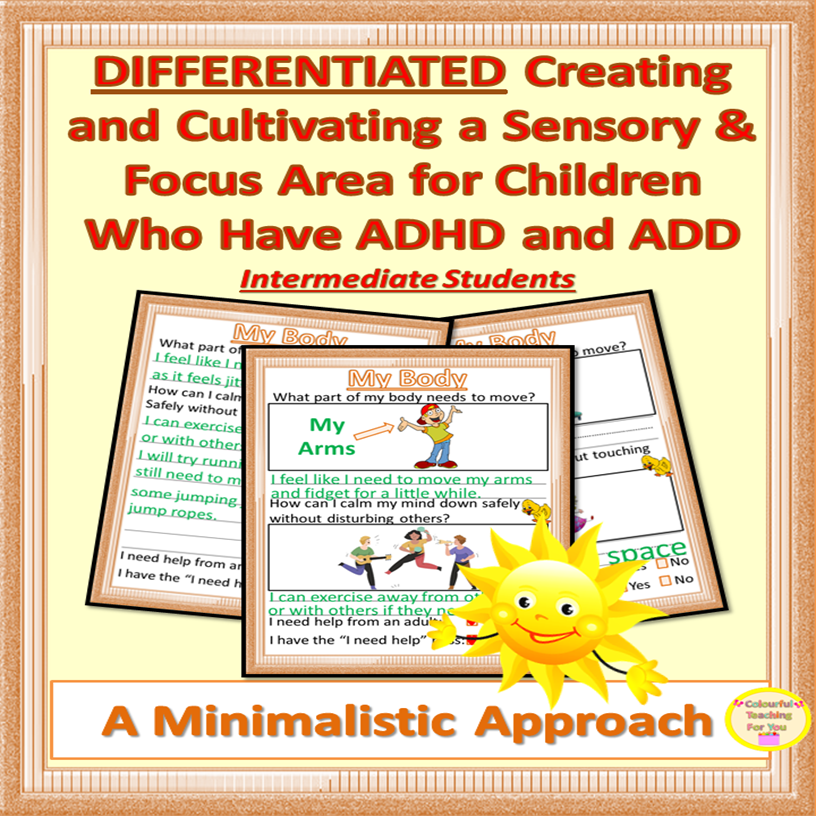
Create a safe space in your classroom or home where your children can go to regulate their thoughts and emotions. Teach them how to use this space, how to understand their emotions and how to manage their thoughts. Let them know that this space is safe for them to use whenever they need it and lay out some privacy stipulations so that they feel comfortable.
A step-by-step plan is laid out for you. All you have to do is click on the images below to find the one that suits the needs of your child.


Depending on the level of your students, I’ve also created a resource that will help you differentiate it for them:
#3. Model Healthy Communication
Once your children have had a chance to calm down, teach them appropriate ways of voicing their thoughts so that it doesn’t fester within them and get more intense overtime.
If there’s a misunderstanding, teach them to ask for clarification, by saying, “I didn’t understand what you said. Can you repeat it in a different way?”
You can also teach them how to use “I Statements” so that they can articulate their emotions by saying, “I feel sad. Can you listen to me and give me some advice?”
#4. Validate and Reframe
Validate your child’s emotions so that they know that you understand them. For example, “It sounds like you are really angry. I’m here for you.”
Then help them reframe their negative thoughts. Depending on the circumstance, you can say, “I love that you worked so hard on this project.” Then ask them to look for evidence to show them what they did correctly.
Recap:
Let’s recap really quickly. Today, we looked at the following:
- The importance of understanding rejection sensitive dysphoria in children.
- How to support children with ADHD and rejection sensitive dysphoria: acknowledge it, create safety, model healthy communication, and validate and reframe.
Free Resources:
For a taste of the resources that were mentioned in step two, check out the following resource in my FREE Education Resource Library.
Teach your little ones how to make good choices with the following FREE Resource:

Next Steps:
If you found this video beneficial, would you do me a favor? Share this with your family, your friends, your loved ones, your co-workers or someone who you think could benefit from this. Thank you!
You’re welcome to join us inside ADHD and Autism Self Regulation by CLICKING HERE or on the fallowing image.

I’ll see you next Friday at 5:30pm PST.
Until I see you next time, remember to create, experience & teach from the heart.
Take care,
Charlotte
Disclaimer: I’m a teacher and a parent. I’m not a medical professional, so please don’t take this as medical advice. The advice that I provide in my videos and online are strategies that I have used in my own class or at home that have worked beautifully.